Hydrocele
Overview
What is it?
A very common urologic disease.
Overview
What is it?
Symptoms
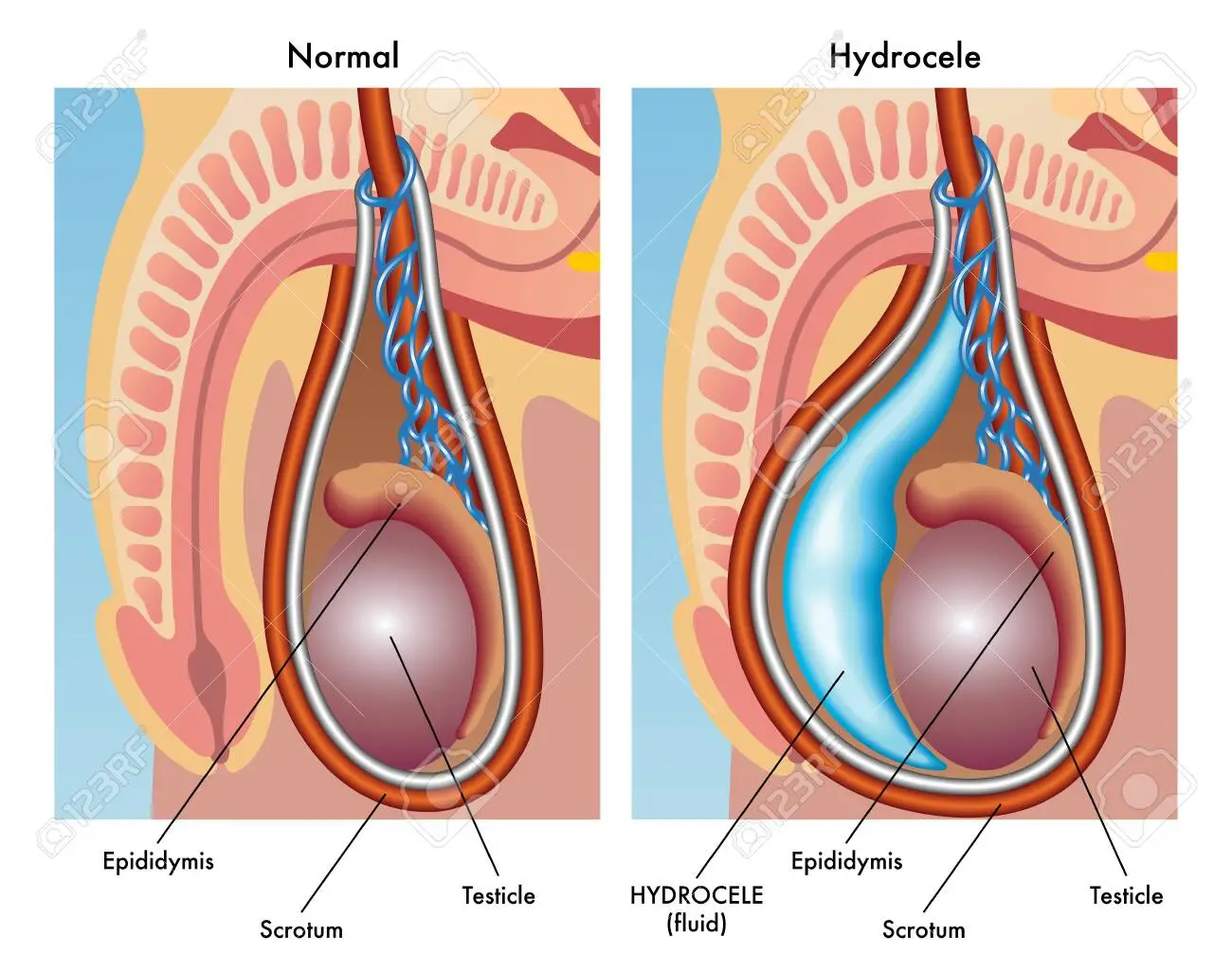
Hydroceles usually don’t cause any pain. Usually, the most common symptom is a swollen scrotum. However, depending on the severity of the swelling, pain or discomfort may also occur.
In adults, there may be a feeling of heaviness in the scrotum. In some cases, the swelling might be worse in the morning than in the evening. It is not usually very painful. For noncommunicating hydroceles, the size usually stays the same or grows very slowly.
Also, with a communicating hydrocele, there’s the potential for other conditions to also develop. For example, with a communicating hydrocele, the sac doesn’t fully close. In most cases, this means that fluid can travel in and out of the sac. But depending on the size of the remaining opening, it’s possible for a hernia to also develop.
Causes
Hydroceles can occur at any age, yet tend to be more common in newborns. While they can occur without any underlying causes, an underlying injury or even inflammation can also contribute to their development. For most people, hydroceles are nothing more than an inconvenient — yet temporary — condition.
Diagnosis
To diagnose a hydrocele, your doctor will perform a physical exam. If you have a hydrocele, your scrotum will be swollen, but you won’t have any pain. Your doctor won’t be able to feel your testicle well through the fluid-filled sac.
Your doctor may check for tenderness in the scrotum and shine a light through the scrotum. This is called transillumination. It allows your doctor to determine if there’s fluid in the scrotum. If fluid is present, the scrotum will allow light transmission, and the scrotum will appear to light up with the light passing through. However, if scrotal swelling is due to a solid mass (cancer), then the light will not shine through the scrotum. This test does not provide a definite diagnosis but can be very helpful.
Treatment
There are no medications available to treat a hydrocele.
A hydrocele usually does not need to be surgically repaired. A hydrocele typically goes away on its own within six to 12 months of age. If the hydrocele does not resolve on its own, then it needs to be surgically repaired to prevent further complications.

More Information
Frequently Asked Questions
Can a hydrocele be prevented?
What should we not do during hydrocele?
Is it okay to masturbate with a hydrocele?