Urinary Incontinence
Overview
What is it?
A very common urologic disease.
Overview
What is it?
Symptoms
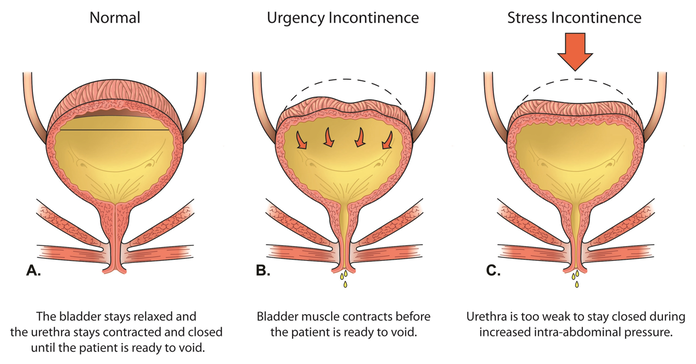
The main symptom of incontinence is a leakage of urine. This could be a constant dripping of urine or an occasional experience of leakage. If you have incontinence, you might have large amounts or small amounts of leaked urine. You might experience leakage for a wide variety of reasons — often depending on the type of incontinence you have.
You might leak urine when you:
- Exercise.
- Cough.
- Laugh.
- Sneeze.
Causes
There are many different reasons that you could experience incontinence. These causes can vary depending on if you’re a woman or man. Some causes are temporary health conditions that usually go away once treated. In those cases, your incontinence also usually stops once the condition is treated. Incontinence can be caused by long-term (chronic) medical conditions. When you experience leakage issues because of a chronic condition, it’s usually something you will have to manage over a longer period of time. Even with treatment, chronic conditions usually don’t go away. Incontinence may have to be managed over time as a symptom of your chronic condition.
Diagnosis
Often, the diagnosis process for incontinence will start with a conversation with your healthcare provider about your medical history and bladder control issues. Your provider might ask you questions like:
- How often do you urinate?
- Do you leak urine between trips to the toilet, how often does this happen and how much urine do you leak each time?
- How long have you been experiencing incontinence?
These questions can help your provider figure out a pattern with your leakage, which often points to a specific type of incontinence. When your provider is asking about your medical history, it’s important to list all of your medications because some medications can cause incontinence. Your provider will also ask about any past pregnancies and the details around each delivery.
Treatment
There are many different factors that your healthcare provider will consider when creating a treatment plan for your incontinence. The type of incontinence and the ways it affects your life are both big considerations. Your provider will also talk to you about the type of treatment you are most comfortable with. There are three main types of treatment you can explore for incontinence — medications, lifestyle changes and surgery. Each option has pros and cons that your provider will discuss with you.
Medications to treat incontinence
There are quite a few medications that can reduce leakage. Some of these drugs stabilize the muscle contractions that cause problems with an overactive bladder. Other medications actually do the opposite thing — relaxing muscles to allow your bladder to empty completely. Hormone replacement therapies can — often involving replacing estrogen that’s decreased during menopause — may also help restore normal bladder function.
In many cases, medications can work very well to return normal function to the bladder. Your provider will carefully select a medication that matches your specific needs. Often, your provider will start you on a low dose of the medication and then increase it slowly. This is done to try and reduce your risks of side effects and to keep track of how well the medication is working to treat your incontinence.

More Information
Frequently Asked Questions
Can incontinence be prevented?
Will I have incontinence for my entire life?
When should I see a doctor about incontinence?